That was the answer.
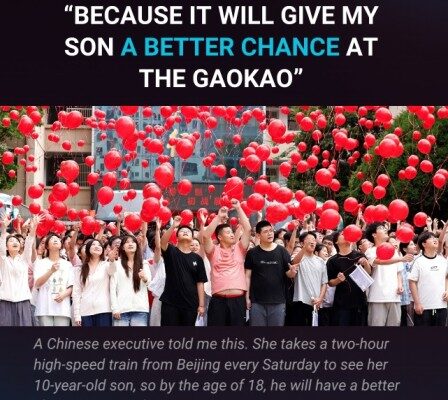
A Chinese executive was telling me that every weekend she takes a two-hour high-speed train from Beijing to the city where her husband and their 10-year-old son live.
Before dawn on Monday morning, she returns to Beijing for work.
Both she and her husband have successful professional careers. They could have chosen a more comfortable life. They did not. I asked her why. Her answer came immediately:
“𝗕𝗲𝗰𝗮𝘂𝘀𝗲 𝗶𝘁 𝘄𝗶𝗹𝗹 𝗴𝗶𝘃𝗲 𝗺𝘆 𝘀𝗼𝗻 𝗮 𝗯𝗲𝘁𝘁𝗲𝗿 𝗰𝗵𝗮𝗻𝗰𝗲 𝗶𝗻 𝘁𝗵𝗲 𝗚𝗮𝗼𝗸𝗮𝗼.”
For those unfamiliar with it, the 𝗚𝗮𝗼𝗸𝗮𝗼 is China’s national university entrance examination. For many students, the results will help determine access to some of the country’s top universities and future career opportunities. This June, 𝟭𝟮.𝟵 𝗺𝗶𝗹𝗹𝗶𝗼𝗻 𝘆𝗼𝘂𝗻𝗴 𝗽𝗲𝗼𝗽𝗹𝗲 took the exam. But that is not the most important number.
The more important reality is that millions of families organize a significant part of their lives around this goal.
Relocations. Long hours of travel. Additional tutoring. Years of study beginning at a very young age. Not because anyone forces them to. Because they believe it is worthwhile.
During my trip to China, I heard a great deal about artificial intelligence, e-commerce, innovation and technology-driven growth.
Yet one of the most important keys to understanding China’s development may not be found in any of those areas. It may be found in a remarkably powerful shared belief:
𝘁𝗵𝗮𝘁 𝗲𝗳𝗳𝗼𝗿𝘁, 𝗱𝗶𝘀𝗰𝗶𝗽𝗹𝗶𝗻𝗲 𝗮𝗻𝗱 𝗲𝗱𝘂𝗰𝗮𝘁𝗶𝗼𝗻 𝗰𝗮𝗻 𝗰𝗵𝗮𝗻𝗴𝗲 𝗮 𝗽𝗲𝗿𝘀𝗼𝗻’𝘀 𝗳𝘂𝘁𝘂𝗿𝗲.
Of course, no society can guarantee complete equality of opportunity.
But when millions of students dedicate years to learning and millions of parents reorganize their lives to support them, education becomes more than a right.
It becomes a responsibility. A family investment.A shared aspiration. And, above all, a pathway to social mobility.
Perhaps that is why what impressed me most about China was not the high-speed trains, the technology or the impressive innovations.
What impressed me most was the number of people who genuinely believe that studying, working hard and preparing oneself can make a difference in life.
And perhaps that belief itself is one of China’s most valuable assets.
Escrito por Nora D’ Alessio, vicepresidenta de D’ Alessio IROL.